Edson College Posts


Health care in the United States stands at a crossroads. Chronic diseases are rising, workforce shortages persist and costs continue to outpace outcomes. At the same time, academic nursing — long a cornerstone of health care education — remains underutilized as a driver of system-level change.
If the past few years have taught us anything as academic nurse leaders, it’s that change isn’t an event—it’s a constant. From evolving accreditation standards and workforce shortages to the rapid integration of technology and the shifting expectations of today’s learners, the ground beneath us seems to move faster each year. Yet amid this flux lies a profound opportunity: to lead with purpose, courage and compassion.
This fall, Arizona State University and Edson College of Nursing and Health Innovation are celebrating a milestone: record-breaking enrollment. It’s a moment that fills us with pride and reaffirms the vital role nursing plays in shaping the future of health care.
Each May, during National Nurses Month, we pause to recognize and celebrate the heart of health care: our nurses. It’s a time to honor the dedication, skill, compassion, and resilience of nurses, not only in the face of extraordinary challenges, but in the everyday moments that often go unseen.
In these moments of uncertainty and rapid change, it is time for us to collectively move forward and focus on the impact we have as educators and health professionals.
At ASU’s Edson College of Nursing and Health Innovation, we have always been guided by a commitment to prepare the next generation of nursing and health professionals for rapidly evolving health care environments. In today’s world, this mission demands more than dedication - it requires us to continually innovate, pivot and embrace the latest tools and resources to ensure our educational offerings remain dynamic and relevant.
I recently posted about ways in which AI is altering the delivery of health care. In this follow-on piece, I’d like to share some additional ways AI and advanced technology are changing how we work.
From enhancing patient care to streamlining administrative tasks, AI is poised to become an indispensable tool for nurses.
As educators and leaders in nursing education, we have a unique opportunity – and indeed, a responsibility – to collaborate in cultivating environments where nurses can thrive.
Arizona State University has launched a new initiative to recruit and prepare more nurse scientists.
Nursing and engineering. What’s the connection? And why is collaboration between these two leading higher education programs essential to our future health care workforce landscape?
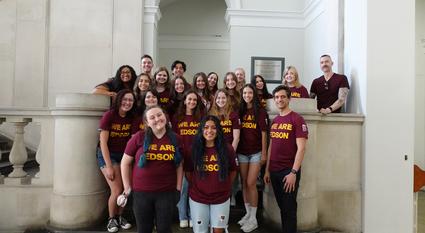
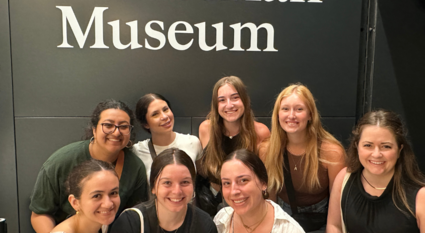
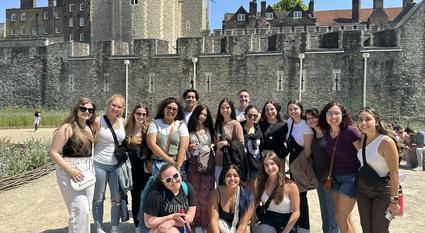
From King’s College London to Oxford, the final week of the inaugural Comparative Health Systems Study Abroad Program in London included campus visits and more.
Week two of the Comparative Health Systems program in London introduced students to the U.K.’s medicinal past and present.
This summer Edson College is embarking on a new study abroad program in London.
The country has been celebrating the contributions of nurses everywhere this May as part of National Nurses Month.
It was wonderful to see so many of you at the recent AACN Doctoral Conference in Coronado, California. I want to extend a special thanks to those of you who attended our hosted reception and round table discussion. So many fabulous ideas came from that session that I’d like to share my notes from the event.
ASU Chief Wellness Officer and Edson College of Nursing and Health Innovation Dean Judith Karshmer suggests pivoting from New Year’s resolutions to recognitions.
The end of the year often brings about both times of reflection and anticipation of new things to come. Many people set resolutions as a way to spur themselves to action with a “fresh slate” in the form of a new calendar year. As educators, it’s incumbent upon us to delve deep into what underlies this urge for change, particularly as it relates to continuing and advanced degree education for nursing and health care professionals - in particular, the pursuit of a DNP designation.
What does innovation in health care education look like in a post-COVID world? Clearly, we are not through the woods, but we have learned we can - and must - be adaptable, because at the beginning of the pandemic, there was simply no other choice. The question now becomes: how do we best take lessons learned and use them to drive forward a new era in nursing and health innovation education? Perhaps more importantly, how do we move from talking to acting?
Shaniece Randolph reflects on her time studying abroad in Peru.